In the final season of his docuseries ‘Pride,’ Mark Kenneth Woods looks back at the most surprising (and wild) moments of the nine-year project
Written by
Paul Gallant
June 24, 2026 last updated August 18, 2026
A 3D character uses a magnifying glass to scrutinize the word QUALITY, symbolizing attention to detail and rigorous standards.
Take 1
Over six seasons of television, Mark Kenneth Woods and his team have visited 42 cities around the world, discovering LGBTQ+ history through the lens of each destination’s Pride celebrations. Looking past the parades, performances and hedonism, they have tried to figure out the forces that have shaped LGBTQ2S+ communities.
Now, the award-winning docuseries Pride—The LGBTQ+ History Series is wrapping up with its sixth season. The final episode, where Woods visits Tulsa, Oklahoma, a conservative city with a rich queer, history, airs July 1 on OutTV.com and other streaming services.
Woods’ history as a maker of queer film and TV goes back a long way, with the The House of Venus Show, which debuted in 2005, making it the world’s first queer sketch comedy show, made with artist and producer Michael Venus. As well as the comedy film Deb and Sisi, and the TV series The Face of Furry Creek, he’s made several documentaries including Two Soft Things, Two Hard Things, about Nunavut’s LGBTQ2S+ community.
Advertisement
Pink Ticket Travel talked to Woods about the series and some of his most vivid memories making it.
This is the sixth and final season of Pride—The LGBTQ+ History Series. What’s that journey been like?
Originally, it was conceived to celebrate the 50th anniversary of Stonewall in 2019. Coincidentally, the decriminalization of homosexuality in Canada was the same year. We were hoping to honour both of those things. It was conceived as a six-episode limited series, but we realized in going to different cities around the world that there was history everywhere. We wanted to explore that more and see where else we could go, to find out more about LGBTQ2S+ history around the world. It worked out.
Why have you decided to wrap it up now?
Because I’m old and tired. That’s literally the answer. I mean, we could do more. It’s just logistics. A lot of Prides all happen at once, in June, and it’s hard to find Prides that happen at other times of the year. Then there’s all the jet lag and the flying and all that. Thankfully, it’s ending on my own terms, which is lovely.
Advertisement
How did the show evolve over its run?
I think we got better over time. But in terms of politics, my god, what a difference. When we thought up the show, almost nine years ago, we were very hopeful. We naively thought that LGBTQ2S+ rights were on the way up and that there would not be any steps back. Obviously, we’ve seen several steps back more recently. I didn’t expect that. I hesitated to go to the U.S., I really did, because of everything going on there. But you know, when somebody calls Portland a war zone [as U.S. president Donald Trump stated in 2025], I want to show the opposite. So, we went to Portland. We also went to Tulsa, Oklahoma, which just seemed like the most Republican place to go in the world.
Documenting history is as much about looking at the challenges and hardships as it is celebrating the victories.
It is. The whole point of the show really has been to show that we were there and always have been, since the beginning. Sometimes we were celebrated, sometimes we were not so celebrated. But we were there. I think there’s this weird idea that everything started at Stonewall. It’s just not the case. People were fighting long before that. Tulsa, which is our final episode, is an interesting example because lesbian and gay architects helped build that city. Queer designers were behind a lot of the early 20th century Art Deco buildings that Tulsa is famous for. Most people there do not know that.
You’ve made 36 episodes featuring 42 cities, each of which has lots of stories. So I’m going to ask you a tough question. What’s the one piece of queer history that surprised you the most while making the show?
I’ve been quite surprised about the LGBTQ+ aspects of the royalty in the United Kingdom. We covered it in the Edinburgh episode in this season, but also in the Manchester episode in Season 2. There were several kings who—I won’t call them gay, because they didn’t use that word at the time—had several male lovers. It is just not talked about. I know there have been a couple of movies made about Edward II, but we cover James VI, also known as James I of England, who hung out with male lovers. He also kind of rewrote the Bible [King James created guidelines for a new English translation of the Bible, published in 1611, intended to create a unified standard for the Church of England].
Advertisement
What touched your heart?
Pride in Johannesburg, South Africa. It wasn’t one particular story. It was being there, seeing people celebrate in their traditional outfits. The city held multiple Pride celebrations kind of at once in different neighbourhoods. One was a little bit richer, the others not so much, so we tried to go to as many as we could. The organizers of Pride in Johannesburg helped Botswana do a Pride, too. Emotionally, that’s what got me the most.
What was the wildest moment?
When we went to San Francisco, we did the Folsom Street Fair rather than Pride. There were a lot of penises and a lot going on. We filmed, but we couldn’t use most of the footage because it was a little, uh, racy. I had never been to a fetish festival before, so it was an eye opener for me.
Let’s go through the cities you did this season one by one, starting with Edinburgh (Read our insider’s guide to Edinburgh here). What impressed you the most about that city?
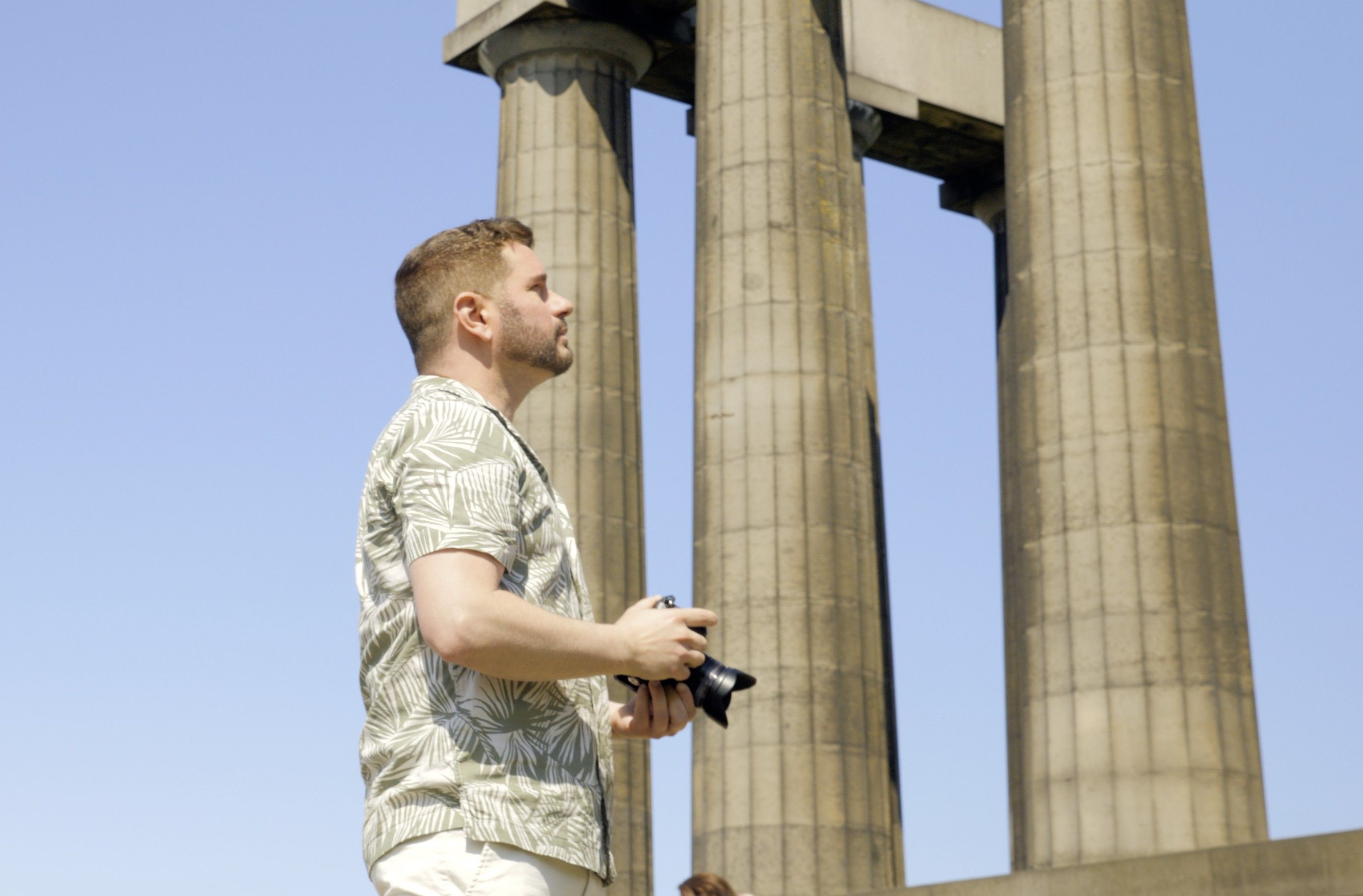
It’s a beautiful city where we learned many trans and lesbian stories, then went to Glasgow to talk to a drag king who hosts a drag king festival. Edinburgh is a little more academic and its architecture is older. Glasgow’s architecture is great, but it’s a bit newer and edgier.
Advertisement
Capturing the beauty of Edinburgh. Credit: Mark Kenneth Woods
Then Portland. What makes it different from other U.S. cities?
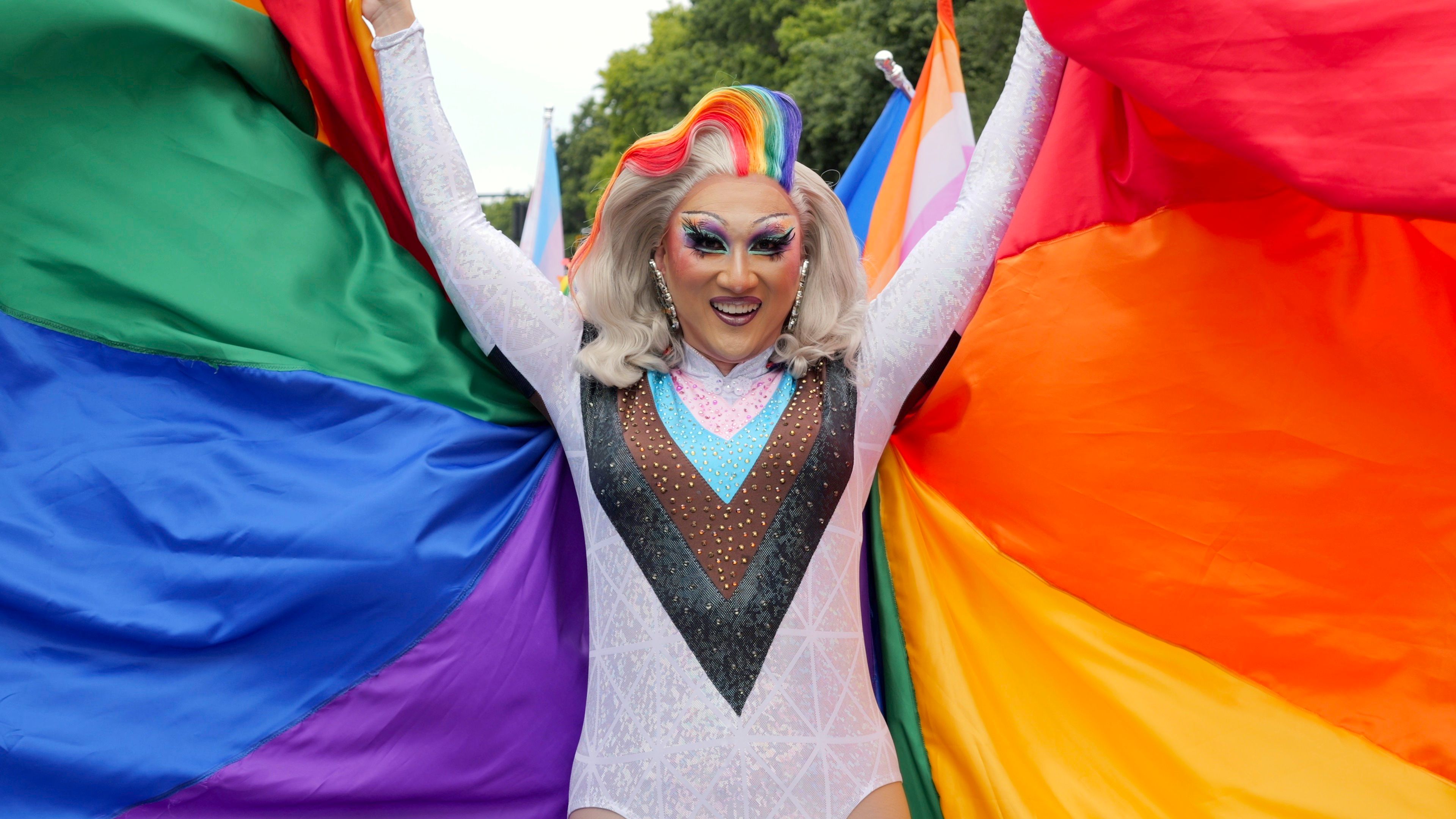
I wanted to go there because a certain orange person really went after Portland and called it a whole bunch of things like a war zone. I had been there before and knew that was clearly not the case. I think we did that and showed what was positive about the city. Three of the people that we interviewed got back to me and said they cried watching the episode and were so happy with the results. They have really cool stuff, like a huge mural of LGBTQ2S+ history in the middle of the city. It’s interesting that Oregon as a whole is quite conservative. Most people think of Portland as being super progressive, but their history had been the opposite until quite recently. It was probably the most interesting Pride I went to this season. The people there were really quirky. There was a lot of clowning and creativity. But very, very nice people.
Pride in Portland, Oregon. Credit: Mark Kenneth Woods
How about Adelaide and Perth? I know they’re really not very close to each other—like a three-hour flight from each other.
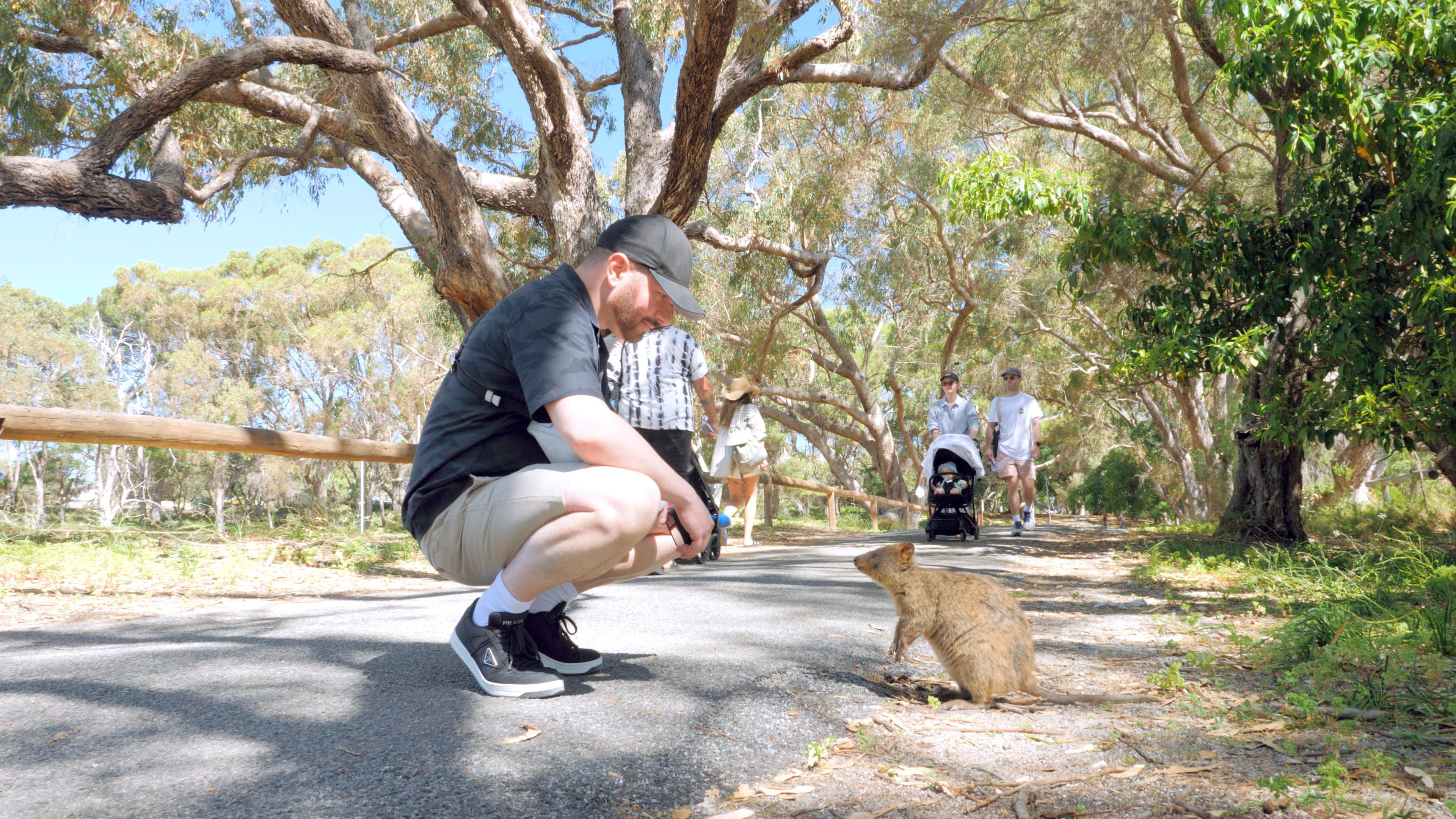
They’re not close at all. Perth is about as far away as you can get and quite isolated, but it’s a beautiful city. It was kind of the weirdest place to go. They have quokkas, these little animals that only live there, which are super cute. We ended up going to Adelaide because the decriminalization of homosexuality in Australia first happened there, in 1975, after a man in Adelaide, George Duncan, was murdered and thrown into River Torrens. That murder, by men believed to be police officers, triggered a backlash that led to decriminalization.
Saying hi to a quokka in Perth, Australia. Credit: Mark Kenneth Woods
And you ended the series in Tulsa, Oklahoma.
Given the political landscape at the moment in the United States, I wanted to do something positive about a part of the world that’s overwhelmingly Republican, to show off what people in the community there are doing to fight back.
Advertisement
What’s your ideal vacation when not making a TV show?
Japan in September is the next big one. I went to Tokyo for a film festival 25 years ago, so it’s time to go back.
This interview has been edited for length and clarity.
Clothing-optional gay beaches are a refuge for our community. But these six are facing serious threats, environmental, legal and otherwise, that could take them away from us