Amsterdam is hosting the 10th WorldPride festival. Judging by WorldPrides past, what should we expect?
Written by
Paul Gallant
July 9, 2026 last updated July 10, 2026
A performer in a vibrant purple feathered dress engages the crowd during a lively Pride event. Her energetic presence captivates the audience.
From July 25 to August 8, one of Europe’s most charming and LGBTQ2S+-friendly cities will host the 10th ever WorldPride festival.
Let’s start with a key fact. A regular Amsterdam Pride, with its street parties and canal parade, is one of the most fun and unique Pride celebrations in the world, attracting as many as a half a million people annually. The bar is set very high.
But for WorldPride, Amsterdam is promising even more. In addition to its canal parade on August 1 and its street festival, there will be:
Advertisement
a July 25 Pride Park kickoff party in Zuid park, including Fetish@Pride
an open-air film festival on July 29 and 30
a ticketed August 4 concert featuring Beth Ditto, Billy Porter, Emma Kok, Gustaph, Tara McDonald and others
a Pride village with LGBTQ+ organizations and vendors from August 5 to 8
a human rights conference for registered attendees from August 5 to 8
an August 6 wedding party for couples who want to tie the knot and partiers who want to celebrate them
an August 8 march
a ticketed August 8 closing concert featuring Olly Alexander from the band Years & Years, The Blessed Madonna and other musical acts
Those are just the biggest events on the Amsterdam schedule. There are many more, starting with an event called RAUM invites Maricas x Bass for Dykes on July 4.
But a simple schedule doesn’t tell newbies what the vibe will be or give a sense of the meaning and purpose of WorldPride, which is a title awarded by an organization called InterPride, a global network of more than 375 Pride organizations from more than 70 countries that works to strengthen the Pride movement.
So let’s take a walk down memory lane and look at what went down at the nine previous WorldPride celebrations—what went right and what went sideways.
Advertisement
1. Rome, Italy, in 2000
The festival that started it all with the beginning of the new millennium had an especially political bent. The event coincided with the Catholic Church’s Great Jubilee and drew opposition from Pope John Paul II and conservative Italian politicians who attempted to revoke the festival’s funding. Despite this, more 250,000 activists and partiers from around the globe flooded the streets of Rome.
What went right
The audacity of drawing a quarter-million people to march past the Vatican solidified WorldPride as a powerful global phenomenon.
What went sideways
Battles with local government and the Vatican meant a constant threat of cancellation, leaving organizers in an agonizing state of legal limbo until the very last minute.
Advertisement
2. Jerusalem in 2006
Hosting WorldPride 2006 in Jerusalem was meant to be as much as or more of a political act as Rome’s WorldPride, bringing queer visibility to the deeply conservative holy city. The planning was fraught; originally scheduled for 2005, it was postponed due to intense regional instability. After the date was set for 2006, the outbreak of the Israel-Lebanon conflict forced the government to cancel the outdoor march due to a lack of security. Ultimately, about 5,000 people attended indoor events.
What went right
The international human rights conference inside the city proved that queer dialogue could survive in the world’s most religiously conservative arenas; a human rights conference remains a mandatory component of every WorldPride.
What went sideways
The outbreak of a military conflict forced the cancellation of the parade, severely limiting the festival’s planned public visibility.
Advertisement
3. London, United Kingdom, in 2012
After Jerusalem, it took six years for another WorldPride to come together. London’s was meant to be a massive, more hedonistic celebration, overlapping with hype for the London 2012 Olympic Games. But the event was hit by a financial crisis and organizational chaos that peaked just weeks before opening. The planned multi-day festival had to be drastically scaled back into a single-day event.
What went right
With so many official events cancelled, the community still came out in droves, filling the main site in Trafalgar Square and gay bars all over the city.
What went sideways
Among the many cancelled events, the city also withdrew the street closure permits for the parade, which was announced the morning of the parade. A march was allowed in one lane of traffic, meaning that floats that had cost large amounts of money to be built couldn’t take part.
Advertisement
4. Toronto, Canada, in 2014
Toronto was the first WorldPride to pull off the full-sized, multi-event vision of WorldPride, hitting all its marks over the 10 days of the festival and solidifying its reputation as a safe, multicultural city that can party with the big kids. The closing parade had 12,000 registered marchers and over 280 massive, vibrant floats, taking more than five hours to pass. An estimated two million people attended.
What went right
Toronto pulled off a balance of seriousness of purpose with an exciting series of parties and events. The streets were all cleaned up within a few hours of the end of its WorldPride.
What went sideways
Commercialization and a corporate-heavy layout drew ire from local grassroots groups, who argued the festival’s radical roots were being sanitized for sponsors.
Advertisement
5. Madrid, Spain, in 2017
If the Toronto festival seemed like an unrepeatable, exuberant spectacle, that’s only because Spain hadn’t yet shown how it could fill the streets. Madrid turned the volume up to eleven, also attracting two million jubilant revellers, supplementing its official events with many ticketed parties from some of the world’s best gay party promoters.
What went right
Like with Toronto, the cooperation of various levels of government produced a festival that ran smoothly and safely.
What went sideways
Scorching, triple-digit summer heatwaves left thousands of parade-goers stranded on baking asphalt without adequate public water stations or shade.
Advertisement
6. New York City, New York, in 2019
Now they’re on an every-second-year cadence. New York City wanted this one badly since the date reflected the 50th anniversary of the Stonewall Uprising, which is largely seen as the defining event in the LGBTQ2S+ liberation movement in the Western world. Manhattan became a sea of five million spectators. The march lasted more than 12 hours, offering a marathon of corporate floats, grassroots community groups and international delegations passing by the historic Stonewall Inn, the place where it all began.
What went right
With so many attendees, NYC’s WorldPride became the largest international Pride celebration in history.
What went sideways
The sheer size of the crowd completely overwhelmed Manhattan’s infrastructure, gridlocking public transit. A splintered, corporate-free Queer Liberation March took place in protest of commercialization.
Advertisement
7. Copenhagen, Denmark, and Malmö, Sweden, in 2021
Staged across two cities in two different countries separated by the Øresund Bridge, WorldPride 2021 was a masterclass in cross-border logistics. It was made even more complicated by taking place during the tail-end of restrictions to slow the spread of COVID-19. Rather than hosting one massive parade, organizers split the celebration into six smaller, localized marches through Copenhagen, alongside an opening parade in Malmö.
What went right
Flawless execution of safety protocols and hybrid digital streaming helped the two countries pull off a festival under strict pandemic limitations.
What went sideways
International travel bans drastically slashed the number of overseas visitors, leaving the festival feeling more like a regional Scandinavian gathering than a true global gathering.
Advertisement
8. Sydney, Australia, in 2023
Sydney rewrote the WorldPride playbook, taking the festival to the Southern Hemisphere for the very first time and blending the global events into its already massive Gay and Lesbian Mardi Gras. It ran for 17 days. The historic march across the Sydney Harbour Bridge saw 50,000 participants clad in bright pastels and neon crossing hand-in-hand. Sydney elevated Indigenous voices to the global stage, leading the festival with a focus on First Nations LGBTQ+ communities from Australia and the Pacific Islands.
What went right
A temporary exhibition about queer stories called Qtopia was held to coincide with Sydney World Pride. One year later, the exhibition was revamped to become a permanent museum, Qtopia Sydney (301 Forbes St., Darlinghurst, New South Wales).
What went sideways
Ticket prices for premium festival events skyrocketed, sparking intense backlash from local queer communities who felt priced out of their own celebration.
Advertisement
9. Washington, DC, in 2025
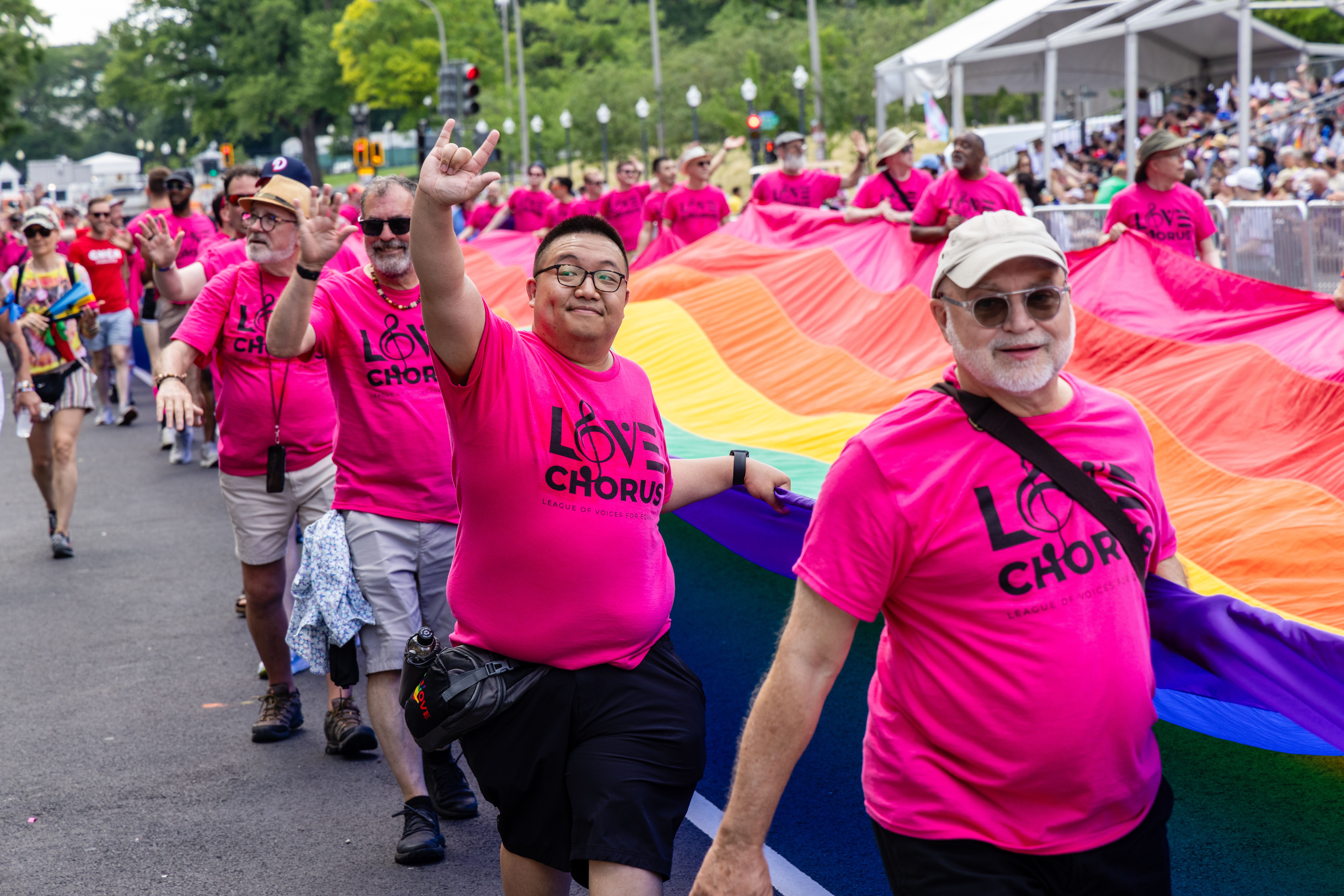
WorldPride in Washington, D.C., in 2025. Credit: Jason Gooljar on Flickr
Set against the backdrop of escalating legislative battles over LGBTQ2S+ rights across the United States, particularly under a president who seems to hold the community in contempt, the U.S. capital’s festival was almost a throwback to the Rome and Jerusalem WorldPrides, with its balance of celebration and political protest. Organizers exploited the symbolism of the city’s monumental architecture, hosting events that stretched from the National Mall to historic queer neighbourhoods like Dupont Circle.
What went right
The festival balanced party culture with urgent political activism, leveraging its proximity to federal power to draw attention to LGBTQ2S+ issues.
What went sideways
Many individuals and organizations, particularly in Canada, chose not to participate in this WorldPride, citing the border policies of President Donald Trump, as well as assorted anti-trans legislation, as being unwelcoming to the community.
Clothing-optional gay beaches are a refuge for our community. But these six are facing serious threats, environmental, legal and otherwise, that could take them away from us