Clothing-optional gay beaches are a refuge for our community. But these six are facing serious threats, environmental, legal and otherwise, that could take them away from us
Written by
Paul Gallant
July 16, 2026 last updated July 10, 2026
A naked individual stands contemplatively on a tranquil sandy beach, gazing at the distant cityscape under a clear blue sky.
Clothing-optional gay beaches have never been more popular—or more talked about. Places that a few decades ago might have been a community secret, heard about only through word of mouth, are now all over social media, as giddy influencers give precise instructions about how to climb over the rocks to find naked gay nirvana. I’m guilty, too. (Read our story about the world’s best gay, clothing-optional beaches here.)
Not all of these queer spaces are thriving. Even as the demand for them grows, many of these special places are being threatened by forces of nature, local authorities and developers. In some places, gay and bi men themselves are to blame for this, when they’re not conscientious about treating these beaches, and the nearby communities, with respect.
Here are six clothing-optional gay beaches under threat—and why.
Advertisement
Canada
Hanlan's Beach in Toronto is officially recognized as a historically queer space. Credit: Paul Gallant
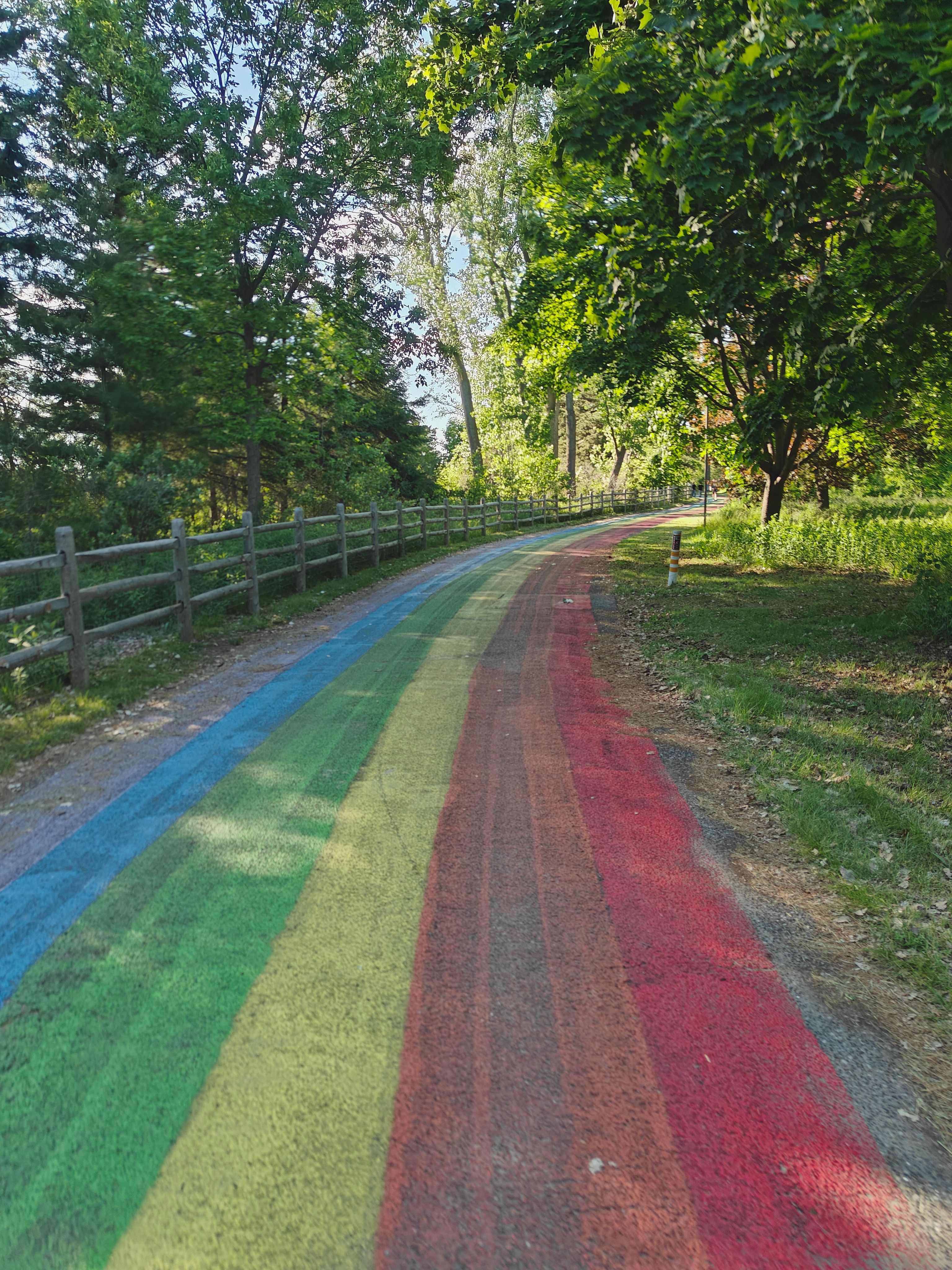
Hanlan’s Point Beach, Toronto. Located on an island a short ferry ride from downtown Toronto, the clothing-optional summertime playground of Toronto’s gay community is facing an invasion from two directions. With a queer history dating back to the mid-20th century (it was where Toronto’s first Pride was held in 1971), in 2023, the city officially recognized the two-kilometre stretch of sand as a Historically Queer Space and commissioned an artist to paint rainbow colours on the biking-and-pedestrian path that runs behind the beach itself. Now, against the wishes of the city, many downtown residents and members of the LGBTQ2S+ community, the provincial government is moving ahead with plans to expand the island airport that’s right next door to Hanlan’s. Years of construction, longer runways and perhaps a larger airport footprint may make the beach a less pleasant place to hang out, flirt and cruise. Or, depending on the eventual plan, it could wipe out the space altogether. Meanwhile, the waters of Lake Ontario have been rougher, causing dramatic erosion on sections of the beach. Much of the 50,000 tonnes of sand that was imported in 2023 to restore the beach was carried away in the subsequent winters. Swaths of beach that have been the stomping ground for hundreds of LGBTQ2IA+ people each weekend can now accommodate only a few dozen, if that.
Wreck Beach, Vancouver. Isolated at the bottom of a cliff near the University of British Columbia, Wreck Beach is a challenging place to get to—unless a sunbather takes a boat, it’s 500 steps down, then back up again. Though it has a long Indigenous and then wartime history (First and Second World War cadets trained here), its gay allure started in the mid-20th century, when locals would come to swim in the buff because it was so private. It got more attention in the 1960s, when the beach became a haven for hippies, free spirits (often a code for queers) and draft dodgers. In 1970, a major police raid to arrest nudists led to a “nude-in” protest where over 3,000 people stripped down in defiance. By the 1980s, there was a noticeable “gay male” section of the beach, even amid the circus-like atmosphere of vendors selling cannabis, shots, baked goods and other assorted treats. But the privacy that led to the beach’s popularity might be coming to an end. In the fall of 2025, defying a protest by a local advocacy group, the University of British Columbia approved a student housing precinct that would accommodate more than 1,500 students, including a 22-storey tower that might give its residents a view of the bare skin and frolicking below.
Australia
King’s Beach, New South Wales. The northeast of the state of New South Wales, closer to Brisbane (less than two hours’ drive) in South East Queensland than Sydney (an eight-hour drive), has three large nature reserves. Inside Broken Head Nature Reserve, there is Kings Beach—250 metres of sand that cannot be seen from the road. Nudists started coming here in the 1930s because it was so isolated (the closest town, Byron Bay, is nine kilometres away) and by the 1970s, it was becoming clear that many of the people who loved Kings Beach were gay. During the height of the HIV/AIDS crisis in the ’80s and ’90s, it was frequently used as a site for memorials, wakes and the scattering of ashes for loved ones lost to the epidemic. Though no beach in the Broken Head Nature Reserve was officially clothing-optional, it was almost never enforced. Then in 2024, in the neighbouring Tyagarah Nature Reserve, New South Wales National Parks and Wildlife Service officials started enforcing a no-nudity policy. Anti-nudity signs went up at Kings Beach. Scared their oasis would be next (perhaps following Hanlan’s example), activists petitioned the government to recognize Kings Beach as a historically gay beach. The application was rejected in 2025, though an openly gay member of the New South Wales state assembly, Alex Greenwich, has taken up the cause.
Advertisement
United States
Denny Blaine Park, Seattle. Many popular clothing-optional beaches around the world are not officially legal; officials merely refrain from enforcing laws against nudity in these spaces, though sometimes an event, like someone witnessing a sexual act or something more serious, triggers a crackdown. Located on the shores of Lake Washington, less than a half hour drive from downtown Seattle, Denny Blaine Park became known as a place to go skinny dipping back in the 1930s. (Depression-era North Americans, it seemed, had a thing for being naked outdoors.) The cat-and-mouse game between police and nudists became queerer (local lesbians referred to Denny Blaine Park as Dykekiki Beach) and more political by the 1970s and ’80s. By the ’90s, the city decided that being topless or fully naked in public was okay, provided that the context was not explicitly sexual. In the 2020s, though, residents of the nearby wealthy neighbourhood started lobbying the government to crackdown on illegal parking, substance use and sexual behaviour. This all ended in court. In June 2026, Seattleites were awaiting a judge’s ruling on whether the city’s unofficial LGBTQ2S+ beach would remain clothing-optional or not.
Spain
Es Cavallet, Ibiza. Considered one of the best gay and nudist beaches in the world, Es Cavallet is a sweeping 1.1-kilometre white-sand beach located in the Ses Salines Natural Park in Ibiza, just a half hour drive from [UNVRS] (formerly called Privilege), the biggest nightclub in the world. A beautiful beach? Mega clubs? The gays had to come, didn’t they? Es Cavallet was officially declared a nudist beach in 1978, but by the time the gay-friendly beach bar and restaurant Chiringay opened in 1981, the majority of visitors were probably LGBTQ+. After leaving the clubs, guys would come to chill and cruise. Because the beach is part of a protected natural park, environmentalists and biologists increasingly raised severe alarms about the degradation of the nearby sand dunes, blaming much of the erosion on traffic from clubbers and cruisers. By the 2020s, local authorities had installed heavy wooden fences and walkways to block off the dunes entirely, with guards patrolling to deter cruising in the protected areas. But the most devastating development, in June 2026, was when Chiringay announced that it was closing, pointing to increasingly complex and expensive regulations applying to businesses operating in the nature park. “After 45 years of love, laughter and summers, the time has come to say goodbye,” the Chiringay family wrote in its farewell message.
Mexico
Zipolite Beach, Oaxaca. Meaning “beach of the dead” in ancient Zapotec, swimming in Zipolite has always been risky because of the big waves and strong undertow. But the 1.5-kilometre stretch of sand, capped with a tiny hard-to-get-to beach called Playa Amor, or “Love Beach,” has, since the 1960s, been more about laidback folks chilling than watersports. Free-love hippies who came to chill in the 1970s were followed by free-love gay men in the ’80s. The beach town, which has a population of about 1,000, was okay with nudity early on, so long as it was on the beach, not on the street. Beach nudity was formally legalized in Zipolite in 2016, making it the only legal clothing-optional public beach in Mexico. The town’s feelings about gay cruising and hooking up on Playa Amor has been more ambivalent. Signs declaring zero tolerance for sexual activity on the beach have been erected, but they’ve never stayed up for very long. Nighttime police raids on Playa Amor have led to arrests for public sexual activity, though there have been no major ones since 2022. No, it’s not the authorities that are putting Zipolite at risk as a gay haven, but Mother Nature. Extreme weather over the last few years has done tremendous damage to the beach. As recently as June 2026, Tropical Storm Boris saw the Pacific Ocean lapping at the fronts of businesses that are normally far away from the waterline. Many businesses never reopened after Hurricane Agatha in 2022 and Hurricane Erick in 2025. The increasing number of gay visitors to Zipolite, and their demands for more upscale and polished experiences, has also put pressure on the town.
How this trans-owned Toronto café became a global destination
Since opening in early 2026, Toronto’s Understory has had customers from Madagascar to Russia. We talked to co-owner Rowan Jetté Knox about the vision for the café