
The Pearl, Denver’s only lesbian bar, was packed when we arrived for dinner one Saturday in the spring, the sprawling space buzzing with way more people than I’d expected at 8 p.m.
The look: a huge, low-lit room, no-frills interior; an area with tables and a bigger separate space for dancing; a vintage photo booth, walls covered with Denver lesbian history and memorabilia, and thumping music. It was the place to be. “Was” being the key word here. The next day, The Pearl suddenly and unexpectedly announced it was closing. Finances, repairs and other drama were too much to keep the establishment afloat, despite a successful last-minute GoFundMe to keep it open (seriously, so much drama).
At first glance, it might seem like Denver’s lesbian spaces are disappearing. That same weekend the queer woman–owned bookstore Petals & Pages said its final goodbye, following the 2025 closure of lesbian-owned taproom Gold Spot Brewing and the 2024 shuttering of longtime lesbian bar Blush & Blu.
These are tough hits. But what really surprised me during my week-long visit to the city is how resilient, active and present the community is, despite the loss of these iconic spots.
A liberal bastion in a Democrat-leaning state with an openly gay man, Jared Polis, as governor, Denver sits at the eastern edge of the Rocky Mountains, a mile above sea level (hence its nickname, the Mile High City). With a metro population of around 3.1 million, including a significant queer population, it’s a place where an outdoor culture built around skiing, hiking and cycling coexists with a thriving arts scene, acclaimed restaurants, many craft breweries and urban energy, which is basically a recipe for attracting lesbians. The downtown core is compact and walkable, and the sunshine is almost absurdly reliable. Meandering around different neighbourhoods, it’s not unusual to see Colorado-themed Pride flags flying in the breeze at private homes, and queer-welcoming signage at shops and restaurants across the city.
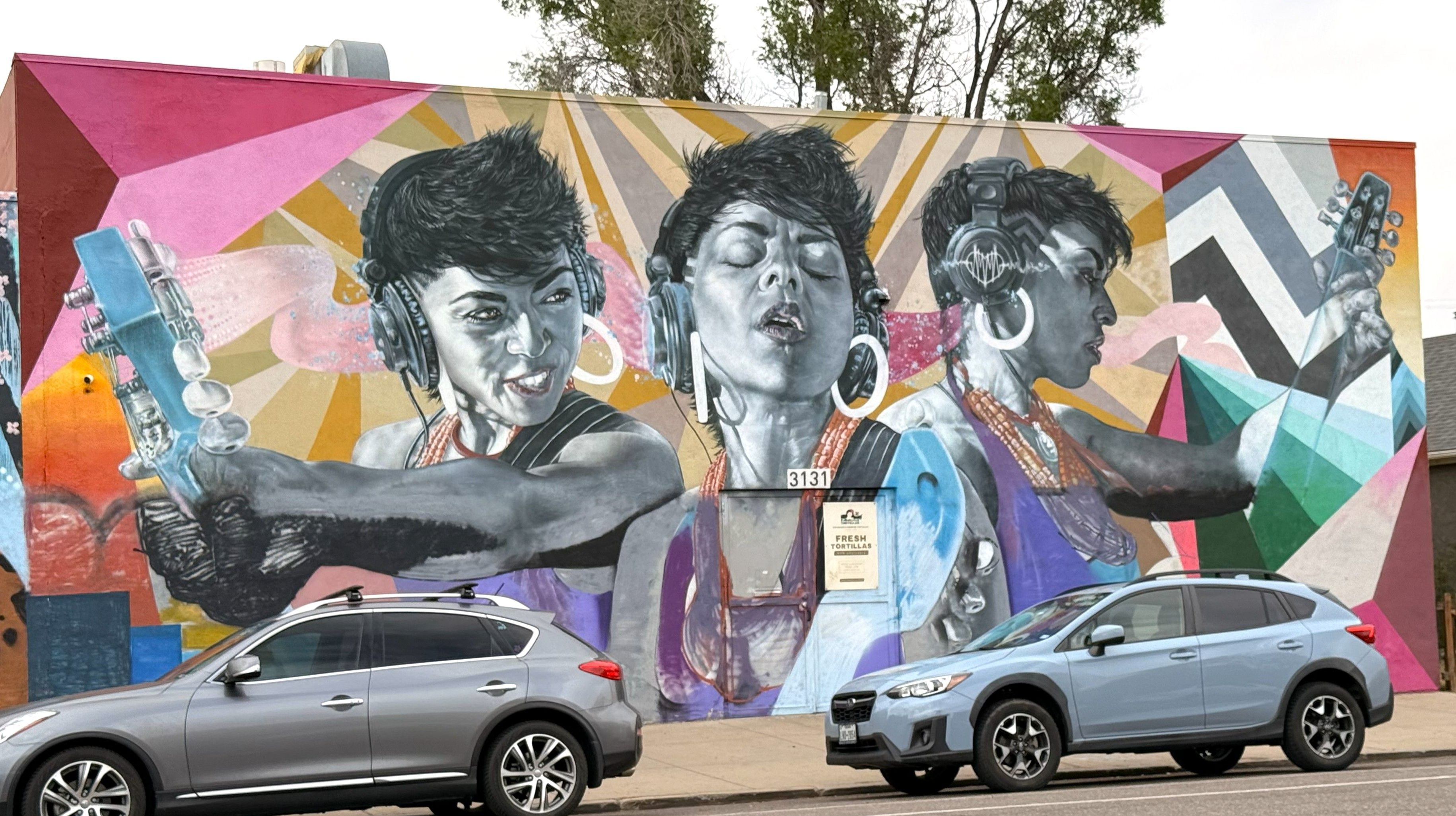
Denver’s two main arts districts, Art District on Santa Fe and the River North (RiNo) Art District, are perfect examples. Spanning from West 13th Avenue to West Alameda Avenue, the Art District on Santa Fe is filled with art galleries, vintage boutiques, artist studios, tattoo parlours, witchy shops, crystal purveyors and a multitude of other independent businesses, including several queer-owned and queer-welcoming establishments. The most impressive is Town Hall Collaborative (525 Santa Fe Dr., Denver), a woman- and queer-owned venue with a bar, café and local art that acts as a modern “town hall” where people can meet, collaborate and build community. Dropping by in the middle of a weekday, I was astounded by the size of the space and how many cool women were just hanging out, drinking coffee, chatting with friends or working on their laptops. Their events calendar is a good way to see what’s coming next.
Nearby, ReCreative Denver (765 Santa Fe Dr., Denver) is a non-profit creative reuse centre that sells donated, second-hand arts and crafts supplies at low prices, to promote sustainability. Positioning itself as LGBTQ2S+-friendly and a transgender safe space, this is the best place in town to find any kind of art product at amazing prices. I picked up a bunch of brand-new rubber stamps as a gift for my crafty mother for about 20 percent of what I would have paid elsewhere. Across the street is Denver Art Society (734 Santa Fe Dr., Denver), a non-profit arts space selling works from more than 120 artists, several of whom open their studios to visitors. Wandering through the space I noticed that many of the artists are openly queer. At Afterglow Vintage (850 Santa Fe Dr., Denver), an LGBTQ2S+- and woman-owned vintage boutique, there was a Tom of Finland–inspired mini exhibit, with vintage homoerotic photos and memorabilia positioned right above assless leather chaps that were for sale. (Those who like to party with beefy men could put those to use at Trade (475 Santa Fe Dr., Denver) the Art District’s gay fetish bar.
The heart of the rival arts district, RiNo, is Larimer Street, a walkable mile-long corridor of massive, colourful murals, galleries and breweries running from Denver Central Market at 27th Street north to 40th Street. This stretch is bookended by Honey Elixir Bar (2636 Walnut St., Denver), a queer- and woman-owned mixed cocktail bar, and Tracks (3500 Walnut St., Denver), a decades-old queer dance club, which can hold 3,500 a night. Though it skews male most nights, Tracks transforms once a month into what it bills as the largest women’s party in America: First Friday Tracks.
Food and drink are central to Denver’s lesbian scene, with queer women behind some of the city’s best restaurants, cafés and at least one brewery. The one catch: they’re spread across town, which makes checking off more than a couple in one visit a real challenge. But I do love a challenge.