Marlie and Sarah, who post on social media as cloud_walks, met on Tinder a decade ago, in the U.K. It started off very casually, but a friend of Sarah’s gave her a bit of advice: “If you ever feel a little connection with anyone you meet online, you should just try and meet them in person once.” Though it took a while for their calendars to align, when they finally got together, they became inseparable.
After a couple of years together, Marlie and Sarah planned a three-year trip that included South America, Asia and a working holiday in Australia. Changes in visa rules, as well as COVID, shook up their plans. They ended up staying in Australia for five years, then two years in New Zealand, an adventure that ends this spring as their visas run out. The three-year trip turned into an eight-year one—and they never even made it to South America.
Pink Ticket Travel talked to the couple about how their travelling-focused life came to be.
As we're chatting you’re in New Zealand. How have you spent your two years there?
Marlie: We got a campervan here, so we’ve been travelling around the country. Every now and again we’ll do random odd jobs. It’s quite popular here for people on working holidays to do farm work jobs. It’s easy work to pick up, but it’s quite cool. You end up meeting so many people from loads of different countries, from many different backgrounds. We’ve really enjoyed that experience.
Sarah: It almost feels like going into a little commune for a while. Often the jobs are quite rural. The farms provide accommodation for everybody. For these highly seasonal jobs, they will need maybe 100 or 200 people, not even for two months sometimes. So you just jump into something like it’s a big campground and you’re all living together, working together. It’s a really fun environment. You can get a lot of hours of work to save up money, then spend the rest of your time travelling around the country.
How would you compare Australia to New Zealand?
Marlie: We thought they’d be a lot more similar than they actually are. There is a difference that you feel, but it’s quite hard to put your finger on what makes them different.
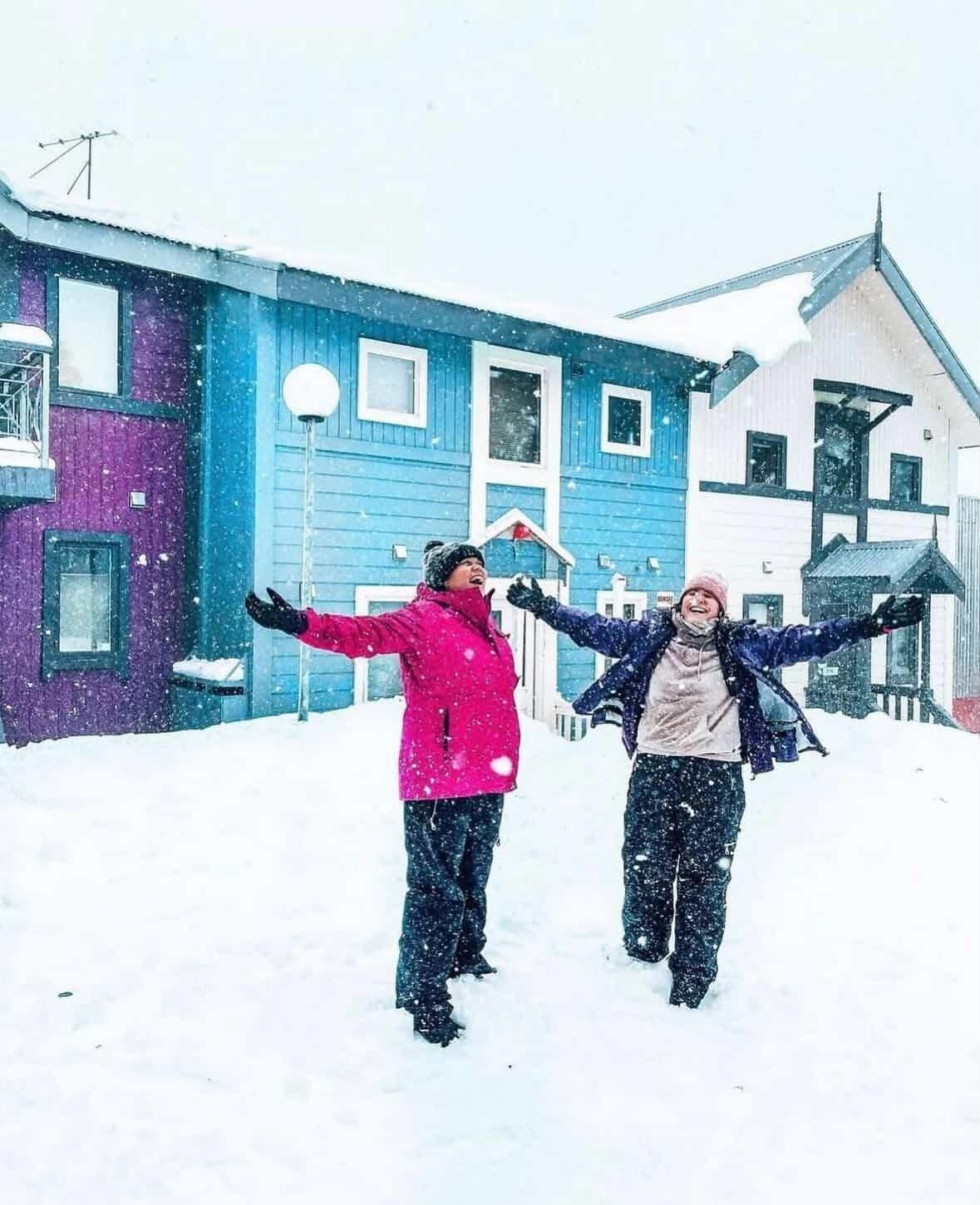
Sarah: In New Zealand there’re a lot more Pacific Islanders, and the Māori culture is integrated a lot more within the country. A lot of people are quite comfortable speaking Māori, saying “Kia ora” for hello and things like that. Australia seems less connected to their Aboriginal culture. Thinking of the climate, Australia is so much warmer. We spent the five years there more or less chasing the sun around the country, because the north of Australia is almost like Asia, with rainy seasons and dry seasons, whereas in the south you’re getting cold winters and hot summers. We moved around, so we never weren’t in the sun. In New Zealand, we couldn’t do that anymore. You can’t avoid the cold weather.
What have you enjoyed most about your time in New Zealand?
Marlie: I’ve definitely enjoyed experiencing Māori culture. When we were in Auckland, we heard that France had the world record for the world’s biggest haka [a traditional Māori ceremonial performance with vigorous movements, rhythmic chanting, foot-stamping and intense facial expressions] in 2014, which is so random. I don’t know why that happened in France. So in 2024, New Zealand had a moment where they were like, “That’s not right, we need to bring that record to New Zealand.” So they held a big event at the Eden Park Stadium, which is the All Blacks football team home stadium. Everyone was invited to learn a haka and join in. We applied, and they sent us a video so we could learn the chant and the moves.
Sarah: We spent each day after work trying to get it together. We weren’t very good at first, but we did get there in the end. There ended up being more than 6,000 people in the stadium doing the haka [setting a new world record], with lots of Māori people there and they were just coming up to us and shaking our hand and hugging us, saying, “It feels really special to be sharing this cultural experience together.” It felt really really special, didn’t it?
Marlie: You obviously see a lot of the haka videos, especially with the All Blacks doing it before games, but when you see one in front of your face, it’s incredible how powerful it feels. It almost brings you to tears.
Sarah: Because we stayed a long time, Auckland holds a special place in our heart. We have friends there now. But I would say that the south of the South Island, like around Wanaka, Milford Sound, brought tears to our eyes. You can’t believe it’s real.

What advice would you give queer women visiting Auckland?
Marlie: Auckland has a lesbian museum, The Charlotte Museum (1A Howe Street, Freemans Bay, Auckland), which we went to a couple of times. They host a lot of different events and it’s such a welcoming place. They also do a lot of poetry slams in Auckland, which really brings queer people together—and the poetry is amazing. Much of the scene is happening on Karangahape Road, but you can just say K’ Road. It’s got quite a few gay bars and welcoming spaces. At Caluzzi Cabaret (461 Karangahape Rd., Auckland), they have drag shows and drag dinners, often with performers who were on Drag Race Down Under, which is super fun. Family Bar and Club (270 Karangahape Rd., Auckland) is a very welcoming gay club.
Sarah: On K’ Road, they’ve got thrift stores, record shops with Pride flags in the window, stuff like that. It’s a very, very welcoming area.
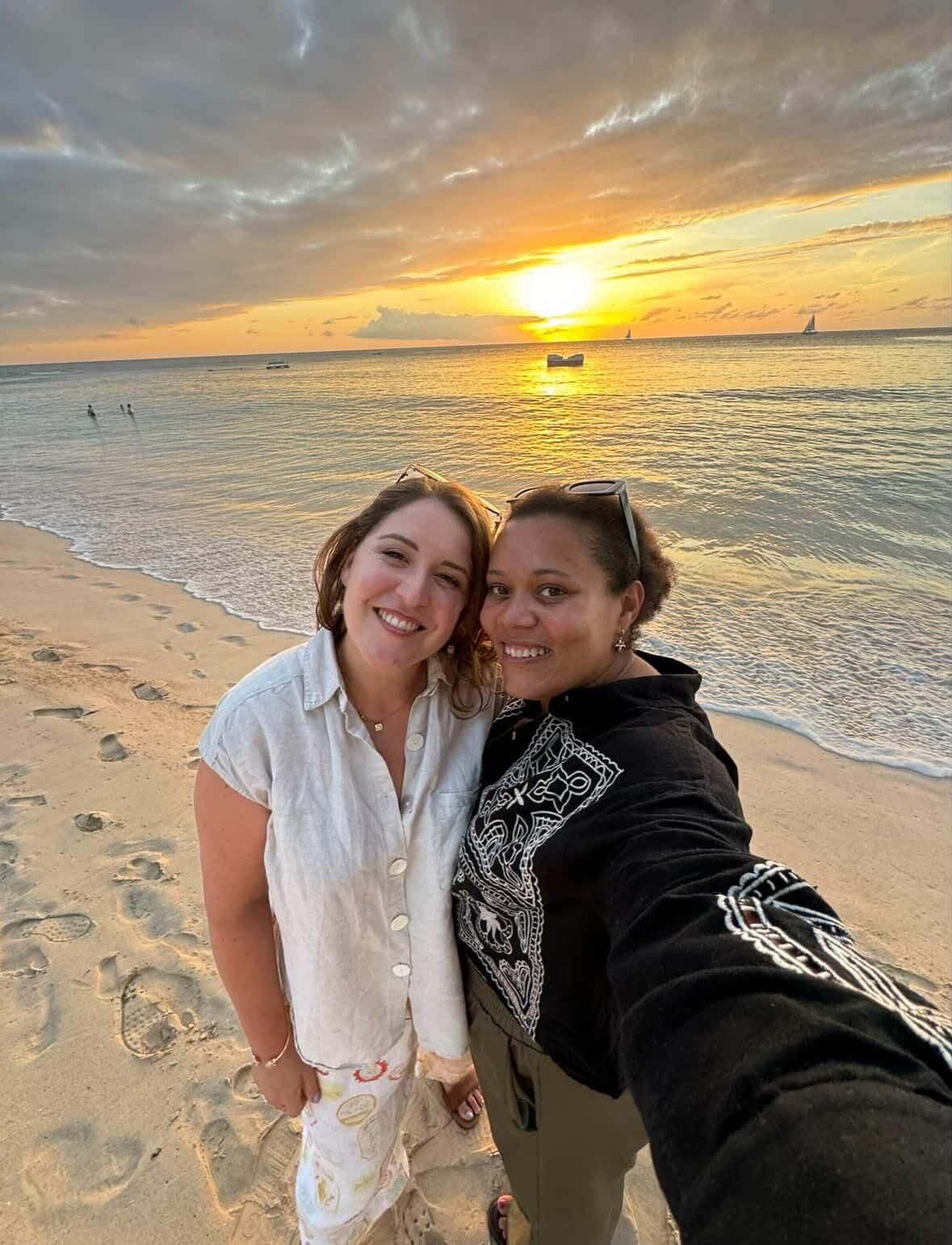
I saw on your Instagram you were recently in Barbados.
Marlie: My dad was born in Saint Lucia, but moved to Barbados when he was about three. So he practically lived there for the first part of his life, and that’s where he and my mum met when she went on holiday to Barbados. Eventually they moved to the U.K. together. It was my first time going back in 20 years—I’d only been there as a child. It was Sarah’s first time in the Caribbean, so she was meeting a lot of my family that still live there.