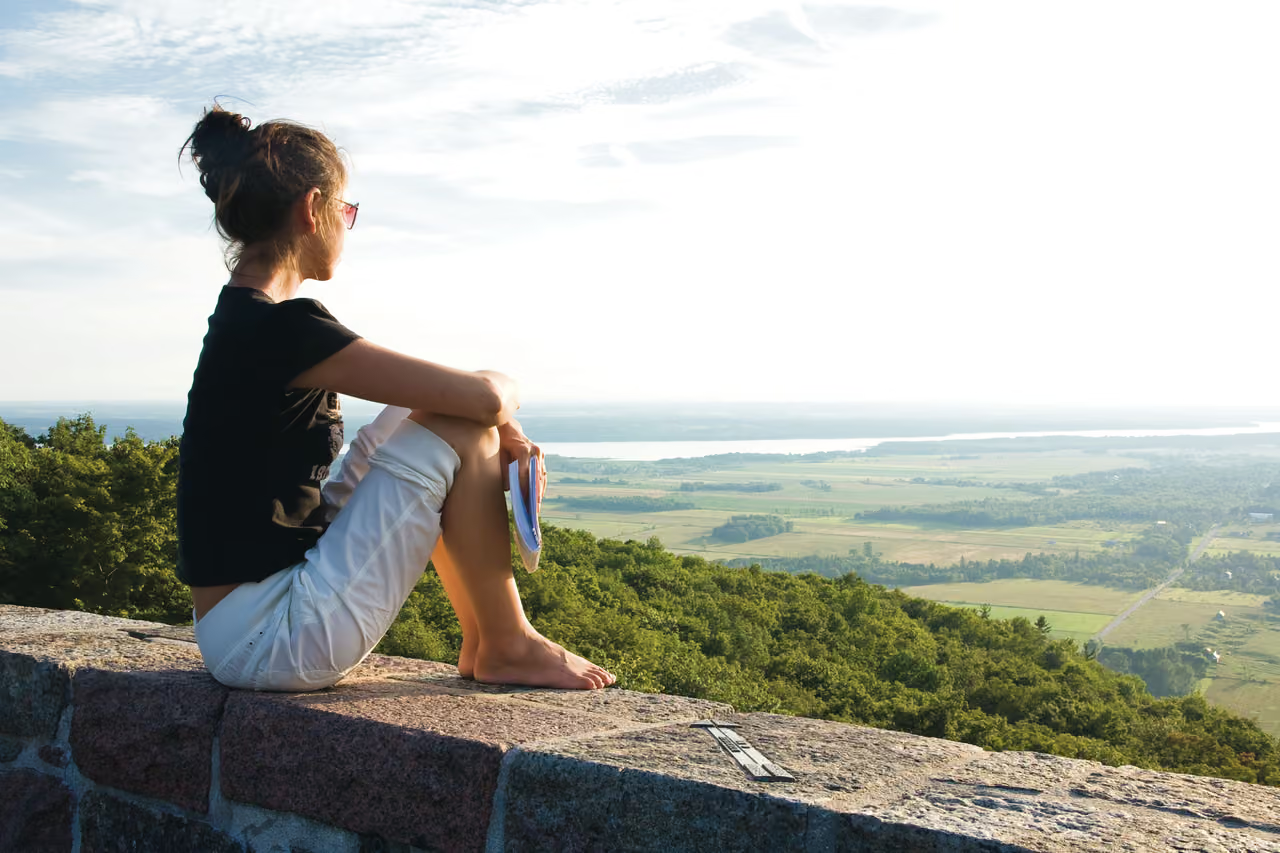
It’s a casual and invigorating walk from the roaring MacLaren Falls on La Pêche River in Outaouais, Quebec, to the town of Wakefield’s iconic covered bridge. From the bridge, originally opened in 1915 and rebuilt in the 1990s with Douglas fir and sided with red-painted pine, cyclists zip across the bridge with a clop-clop-clop on the wooden boards. From the bridge, it’s a short hike up one of the nearby hills for a better view of the Gatineau River, and then back down to the artsy-fartsy town of Wakefield itself. Gorgeous water, hills and forest frame a main street of cafés, bakeries, restaurants and boutiques that line the riverside. A kayaker, canoeist or inner-tuber could paddle almost right up to Kaffé 1870 (715 Chemin Riverside, Wakefield) to order a cheekily-named specialty hot dog like Le Gross Dill, Le Seoul-Mate or Le Bang-Cock for a snack before getting back on the river.
The combination of an open-minded bohemian community, population 2,000, that loves its quality of life—where there are a surprising number of good restaurants and nights when there’s music or some other cultural event happening—with easy access to biking, hiking, kayaking, boating and other outdoor activities is something the province of Quebec does exceptionally well. But the Outaouais region, just across the Ottawa River from the nation’s capital and extending north to the rugged backpacker country of Vallée-de-la-Gatineau, seems designed for just that kind of “belle vie.” They’ve got the Gatineau Hills, among the oldest mountains on Earth; several impressive rivers; an array of museums and spas; and not one but two wine-producing regions. Work up a sweat, pamper yourself or dig deep into Canadian culture—it’s not a decision Outaouais expects a visitor to make. Touring the area by car with a friend, we were surprised again and again by the variety of experiences we discovered, how friendly everyone was and how easy it is to get by with only English.
When foreign visitors imagine that their trip to Canada will have them bouncing easily between urbanity, countryside and human-less wilderness, they’re mostly delusional. Most of Canada is too big and spread out for that kind of trip.. But in Outaouais, it’s possible to get from downtown Ottawa to Gatineau Park, an ecological zone of 361 square kilometres that’s home to a remote and much loved gay beach, in a 20-minute drive or 30-minute bike ride. From Ottawa, adorable Wakefield’s just a 35-minute drive and the town of Low, the beginning of Véloroute des Draveurs, a unique 72-kilometre rail-trail that goes north all the way to Maniwaki, is less than an hour away.
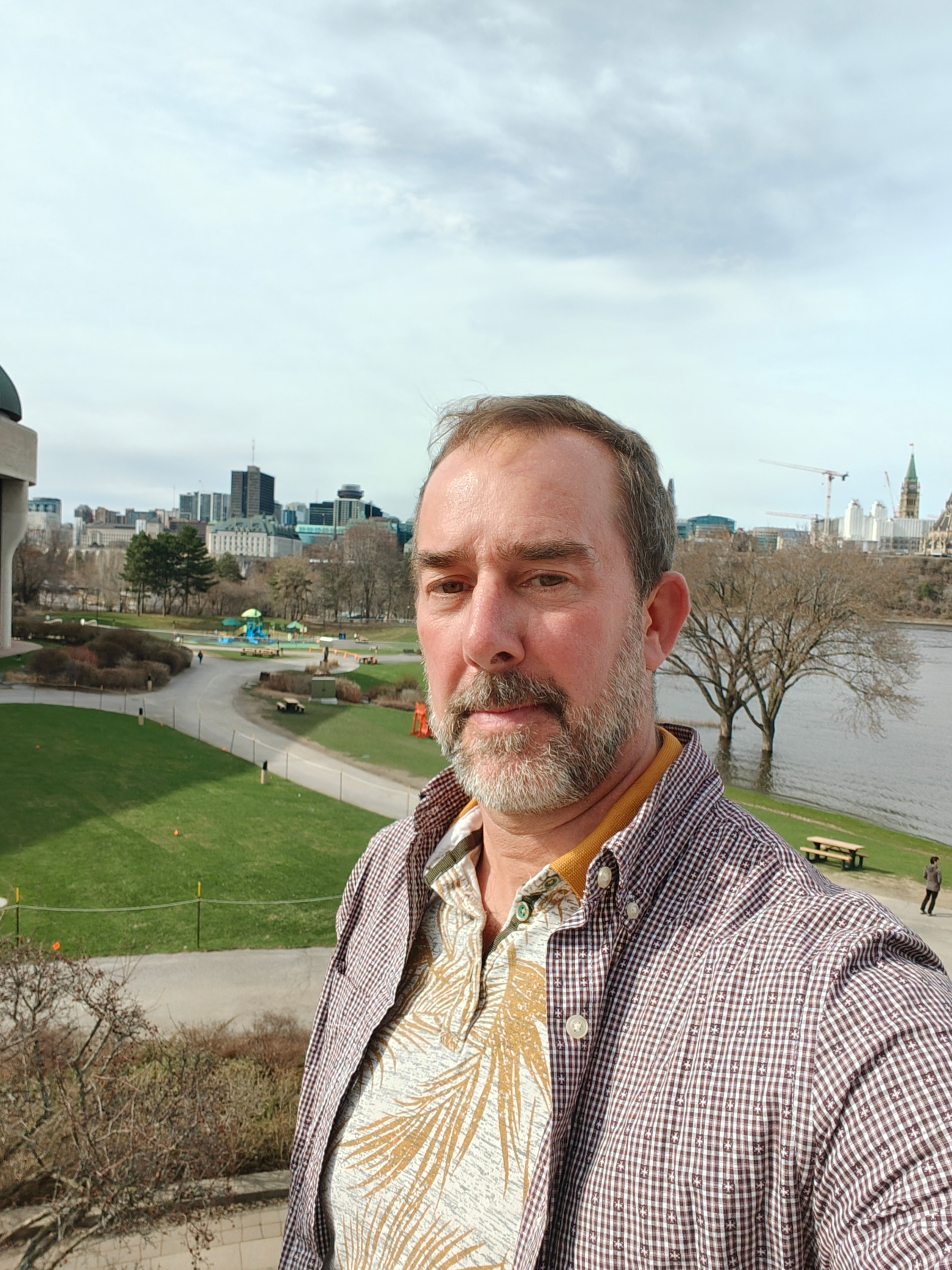
I first came to know of Outaouais many decades ago, when a university student in Ottawa.At the time, I formed an opinion of the region that was clumsy…but ultimately accurate. Ottawa, a classic government town, is pretty and well served by public institutions, but it’s a very reserved place. As students, we didn’t stray far from campus. On weekend nights, however, we’d taxi across the Chaudière Bridge to hit the clubs in Hull (now part of the amalgamated city of Gatineau), which were much cooler, open much later and were much more gay-friendly than those on the Ontario side of the River. My other impression of Outaouais: in the fall, anyone with a car joined the legions of tourists who would drive around the Gatineau Hills, its mix of sugar maples, red oaks, American beeches and birches forming a canopy so painterly they’ve built a festival around it—Fall Rhapsody—each October. Outaouais is nature at its most colourful and accessible.
The stereotype of “cool with the queers” paired with gorgeous landscapes is still true—it’s the playground of the National Capital Region. But Outaouais is a richer destination, with a deeper, quirkier history than that.
For example, Petite Nation, the area east of Ottawa, closest to Montreal, has a bucolic landscape and an emerging wine industry. We stopped by Domaine du Mont-Vézeau (365 Québec 321, Ripon) just as the voluble proprietor, Marc Renaud, was opening up previous years’ vintages for the first time to plan his future blends. DMV, one of four commercial wine producers in Petite Nation, is known for its artisanally crafted strawberry and raspberry wines, often served with their own wood-fired pizzas. But Renaud’s passion and ambition as a winemaker has been leading him in interesting directions, trying new grape varieties to achieve compelling sparkling and low-sugar wines. One of his most successful vintages from a couple of years ago sold out so quickly Renaud didn’t manage to keep a bottle for his own archives. I learned more about making wine from Renaud than I have on any other wine tour. He’s one of the stops on the Adventure Outaouais wine and cider tour that runs each summer and offers a pickup service from major hotels in Ottawa and Gatineau.
We left Renaud and weaved our way by car through the rolling hills of wine country, toward the Ottawa River, which defines the region (Outaouais and Ottawa are, respectively, the French and English transliterations of the Anishinaabemowin word “Odawa,” which means “to trade” or “traders”). We arrived at Centre d’art populaire du Québec (276 Rue Desjardins, Plaisance) not really knowing what to expect. It’s a mind-blower. Drawing on Quebec’s gosseux tradition of whittling and wood carving practised by self-taught rural artists—often farmers, loggers and labourers—the museum is a phantasmagoria of colourful sculptures and installations. A lot of it is old-school folksy, but some of it is absurdly, psychedelically breathtaking, much of it displayed in galleries that are sometimes works of art themselves, with tree branches that stretch down hallways and quilts as walls. A visitor can see how much thought and imagination has gone into the presentation of the work. The basement exhibition, dedicated to artist Florent Veilleux, who died in 2023, is a Rube Goldberg–style wonderland of buzzing machines, twirling and bouncing plastic action figures, flickering screens and spinning dials and disks. Veilleux was as much an electrical engineer as an artist. Centre director Isabelle Thom told us their electricity bill jumps dramatically when the room is activated. Opened in 2019, the centre has been so successful, they’ve purchased the church next door to expand into.
Certainly, Wakefield, Plaisance and the nearby community of Montebello, which has a cheese shop, Fromagerie Montebello (664-A Rue Notre Dame), worth driving across the country for, lean into the historic and the quaint. But Outaouais’s other charming community, Chelsea, has a trendier, youthful vibe that’s more about eco-consciousness than antiques. Located at the main south entrance to Gatineau Park, its village core is Square Old Chelsea (248 Chemin Old Chelsea, Chelsea), a downtown-slash-entertainment complex with a chic distillery, pub, bakery, general store and terrace. It’s a place to sip cocktails or specialty coffee after a day of biking, hiking or otherwise outdoorsy-ing in the park. With a population of about 9,000 and growing, Chelsea seems to attract young, active residents who want urban conveniences and attitudes but a small-town quality of life.